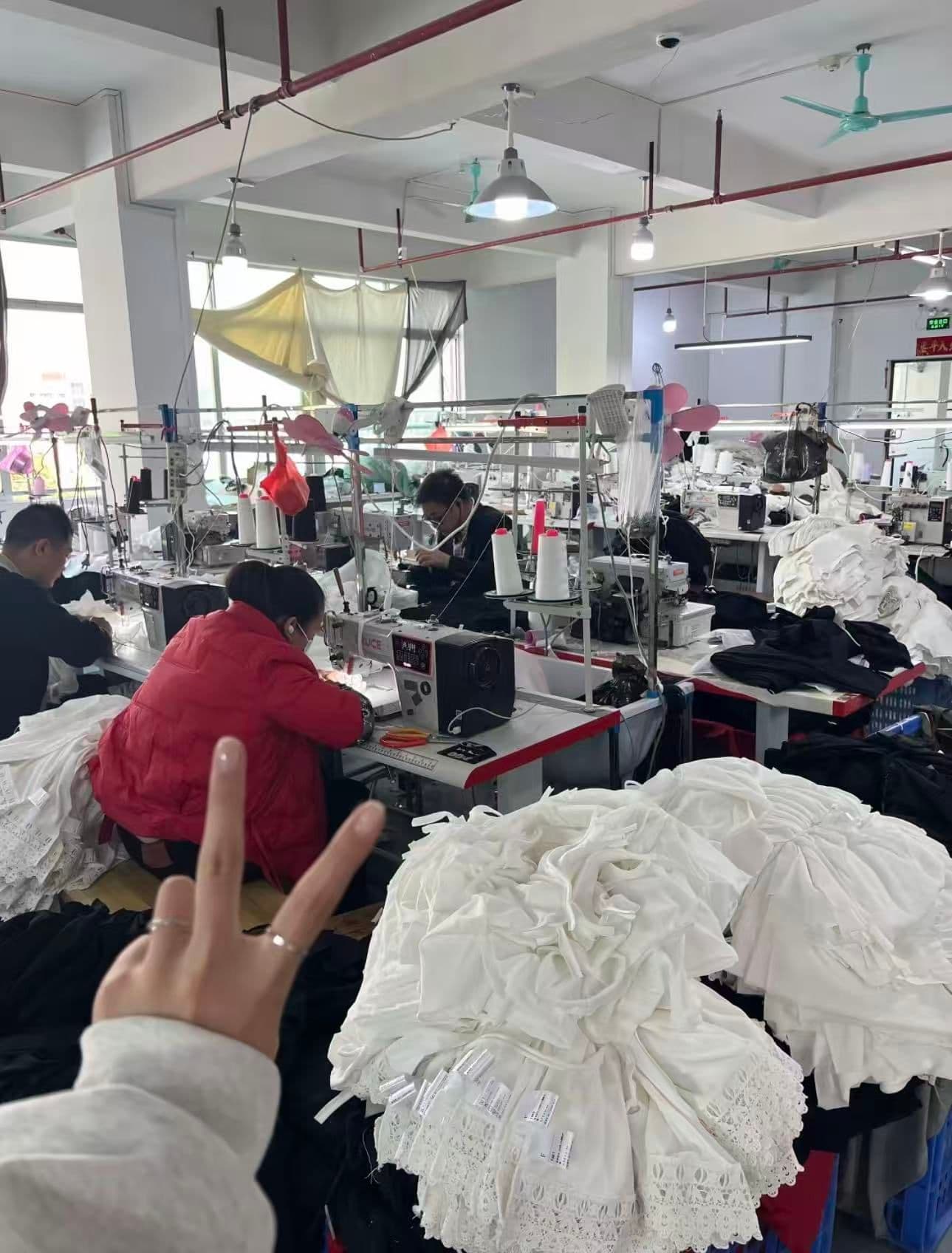
Having Clothing Made in China: Process, MOQ and Costs
How a product idea becomes an approved, inspected and import-ready apparel production run.
Request a quoteAnyone having clothing made in China plans three things at once: product, manufacturing and import. DS Trading starts at 300 pieces. How sizes and colours are split depends on the article, fabric and construction and is clarified per project.
1. Define the product and target group
A manufacturer can only quote what has been described. Fabric composition and weight per square metre, cut, measurements, size grading, colour, seams, print or embroidery, labels and packaging belong in a specification. For workwear or functional clothing, requirements specific to the intended use are added.
2. Choose a suitable apparel manufacturer
A T-shirt factory is not automatically the right partner for heavyweight hoodies or activewear. We match product category, access to materials, machinery, workmanship and quantity with suitable manufacturers and verify the company before the first order. Our main manufacturer page explains the process in detail: Having clothing made in China.
3. Approve the sample and manage the production run
The physical pre-production sample shows whether the specification and the actual product match. We send you the sample before the series, so you can check the product with your own hands and eyes before you buy. Samples and their shipping are charged; we tell you the cost in advance. No production run starts without written approval. Our own team in China checks the goods during production and again after completion, before shipment, on site at the producer, against the same reference.
- Version the specification and document changes
- Check fit and measurements on real samples
- Approve colour, print, embroidery and labels in writing
- Agree inspection criteria before production ends
4. Calculate costs up to the delivery address
Depending on the order, the ex-works price is joined by samples, packaging, inspection, lead time, sea or air freight, insurance, customs treatment, import handling and delivery. Tariff classification depends on the specific article. Use the landed cost template so that no cost item is missed.
5. Plan for labelling and product safety
For textile products within its scope, the EU Textile Labelling Regulation requires information on fibre composition, and that information must also be visible to consumers before an online purchase. Further product and safety requirements depend on the article and its use. A quality inspection checks the agreed specification, but it does not replace a legal product assessment or any required laboratory testing.
DS Trading combines manufacturer communication in China with import handling for deliveries to the EU and Switzerland. For a reliable assessment, send article, quantity, reference and destination via the enquiry form.
Frequently asked questions
What is the MOQ for clothing?
At DS Trading, the minimum order quantity is 300 pieces. How it can be split across sizes, colours and variants depends on the specific article.
What does an apparel production run cost?
It depends on fabric, weight per square metre, cut, finishing, packaging, quantity and shipping route. You should compare the full landed cost rather than just the ex-works price.
Who inspects the finished goods?
Our own team in China checks the goods during production and again after completion, before shipment, on site at the producer, against the approved sample and your specification.
Sources
- Verordnung (EU) Nr. 1007/2011 über Textilfaserbezeichnungen und KennzeichnungEuropäische Union · konsolidierte Fassung · accessed 24.08.2026
- Verordnung (EU) 2023/988 über die allgemeine ProduktsicherheitEuropäische Union · 10.05.2023 · accessed 24.08.2026
- EU Customs Tariff (TARIC)Europäische Kommission · laufend aktualisiert · accessed 24.08.2026
Ready for your quote?
Send us your product and target quantity. We reply within 48 hours with a quote including landed cost and lead time.
Request a quote