T-shirt manufacturers in China for private label
We source T-shirt manufacturers for your fabric, fit and finishing, coordinate samples and inspection, and deliver the finished order to the EU and Switzerland from 300 pieces.
Request a quoteDefine the T-shirt before comparing prices
A meaningful T-shirt quotation needs more than a photo. Fabric composition, weight, knit, wash, fit, neckline, seams, size grading, colour and packaging all affect the result and the unit price. We collect these details in one specification so each manufacturer quotes the same article.
Printing and embroidery are also specified by position, dimensions, colours and artwork. Labels, care labels and hangtags can be included for a private-label product. If no tech pack exists yet, a reference shirt and a marked-up sketch can provide the starting point.
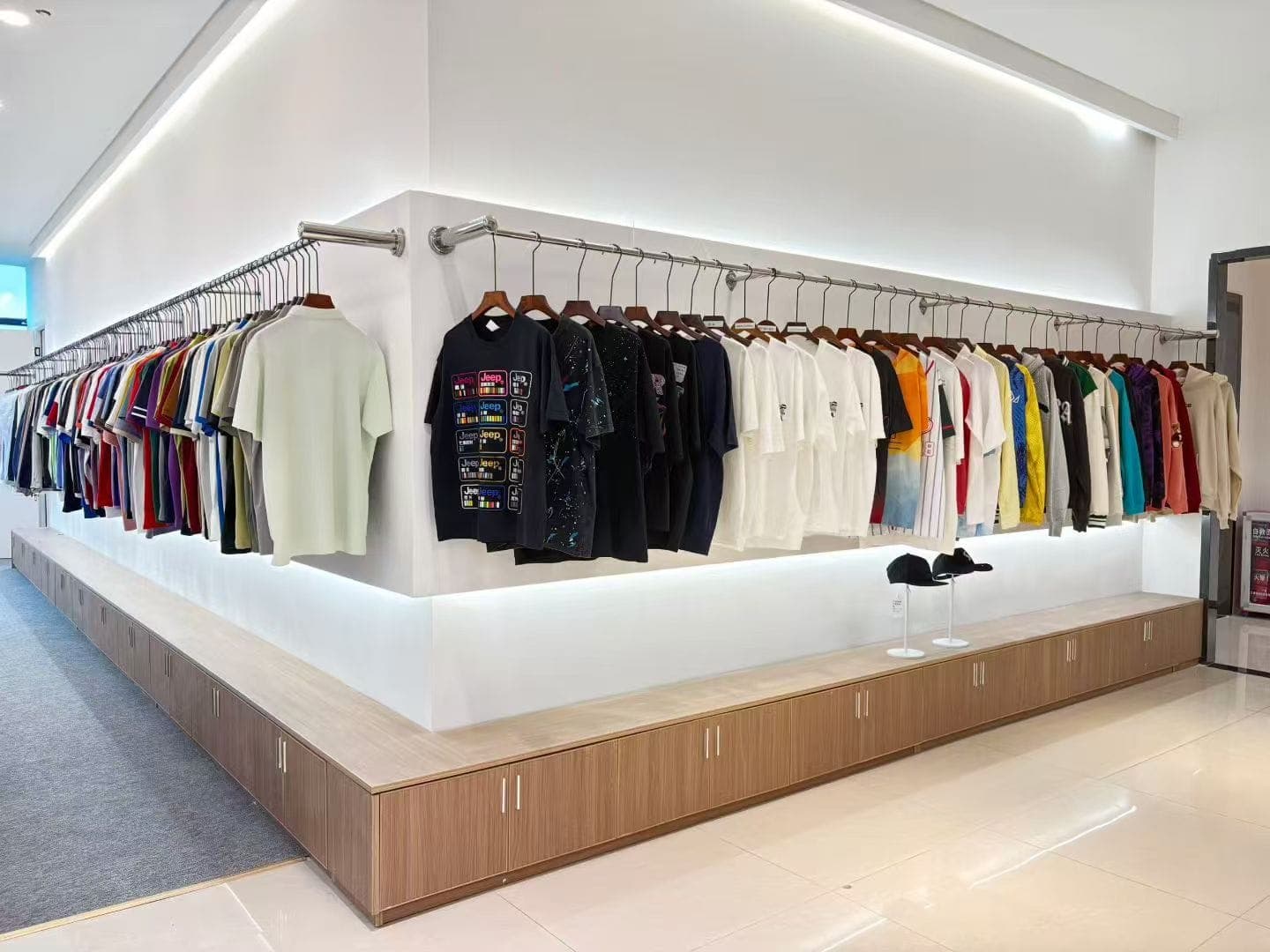
T-shirts from producers we know personally
For T-shirts, our network ranges from a supplier of white blank shirts in fixed weights to a streetwear producer that washes, prints and embroiders heavy cotton. Our co-founder Felix works in China with a whole team, and together they know more than 100 producers personally. If you want to know whether a factory does cutting, sewing and printing itself, someone from the team checks it on site straight away.
One European contact goes through your shirt with you, from the fabric weight to the way it is folded into the bag, and makes the order happen. For many companies, importing from China is a black box; with us you see every step. As soon as the sample is ready, the run starts or a print is delayed, you hear it from us without having to ask. The delivery dates we give are calculated realistically, and we do everything we can to keep them.
If something is wrong with the goods, a shade or a body length for instance, we talk to you at once and come to see you in person. Your trust matters more to us than anything else. Your unit price is usually lower than sourcing yourself or using other sourcing agencies, because we run the China part and the Germany part ourselves, compare both and take the cheaper option each time. We negotiate the price with the producer as hard as we can. Delivery is DDP, with an invoice from Germany.
- Blank, teamwear and streetwear producers in our network
- One European contact for sample, run and shipping
- DDP delivery, invoice from Germany
Sampling, fit and colour approval
You receive a physical pre-production sample before series production. Depending on the producer, a T-shirt sample is ready after roughly one to two weeks. We send it to you so you can check fabric, length and neckline on the body. The sample and its shipping are not free; we tell you the amount before the sample is sewn. You approve material, fit, workmanship and finishing in writing, and only then does the run begin.
Wash the sample once according to its care label and measure length and chest width again afterwards. That shows you how much the fabric shrinks before thousands of shirts are made from it.
The approved sample remains the reference for the production run and future reorders. Colour and sizing deserve particular attention because deviations between dye lots or grading can affect the appearance and return rate even when the design looks unchanged.
Fabric, knit and construction
A T-shirt spec starts with the knit: single jersey or double jersey, in 150, 180 or 200 g/m². 180 g/m² is the common anchor for a mid-weight basic. Combed ring-spun cotton gives a smoother surface and less pilling than carded yarn.
Construction decides how the shirt wears: tubular (no side seams, lower cost, can twist after washing) or side-seamed (holds shape better). Neck ribbing and a shoulder-to-shoulder tape are specified separately. The GSM tolerance is one of the points checked at the final inspection before shipment.
- Single or double jersey, 150 / 180 / 200 g/m²
- Combed ring-spun cotton for a smoother surface
- Tubular or side-seamed construction
- Neck ribbing and shoulder tape specified separately
- GSM tolerance checked at the final inspection
Which weight for which shirt
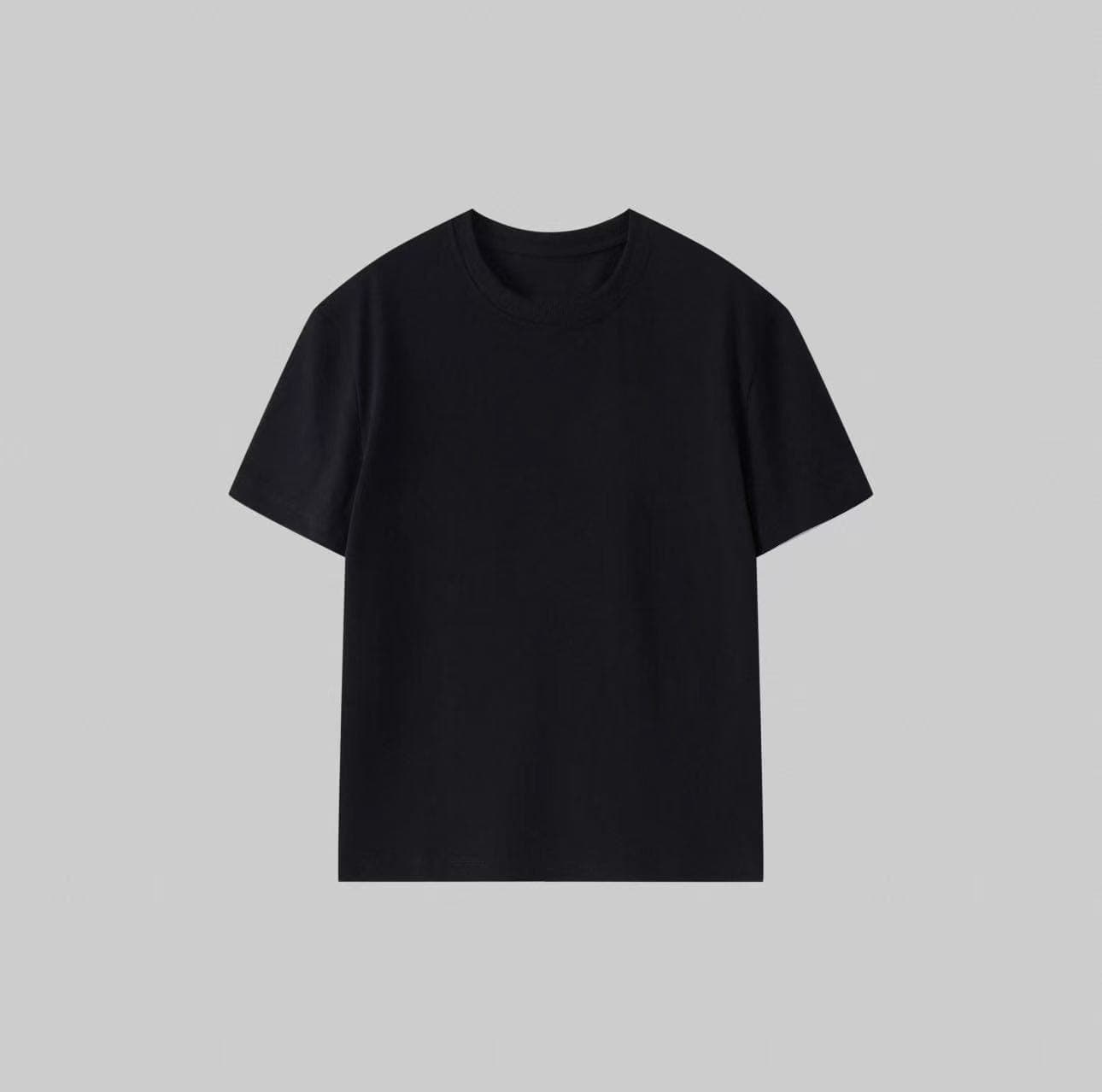
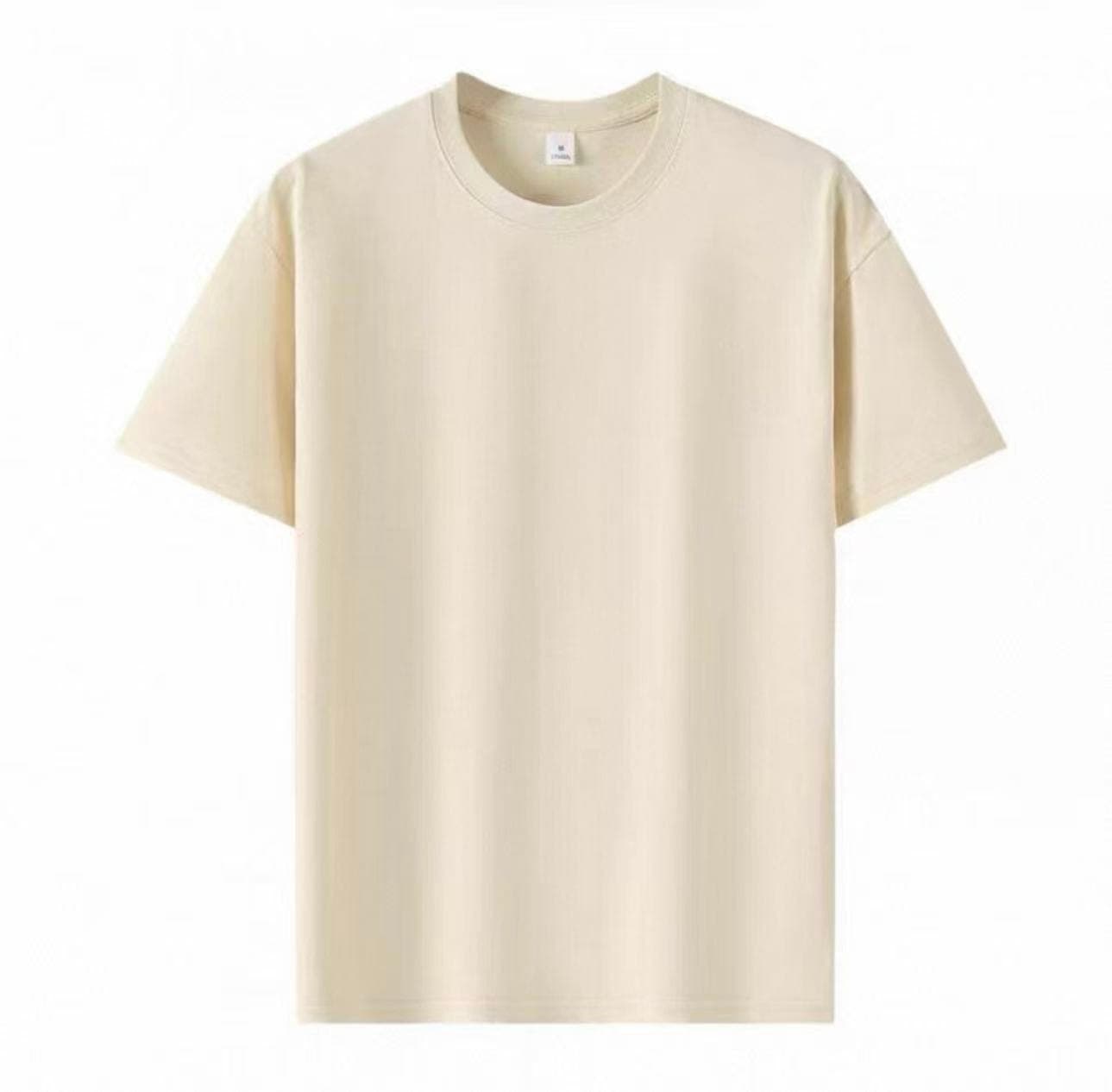
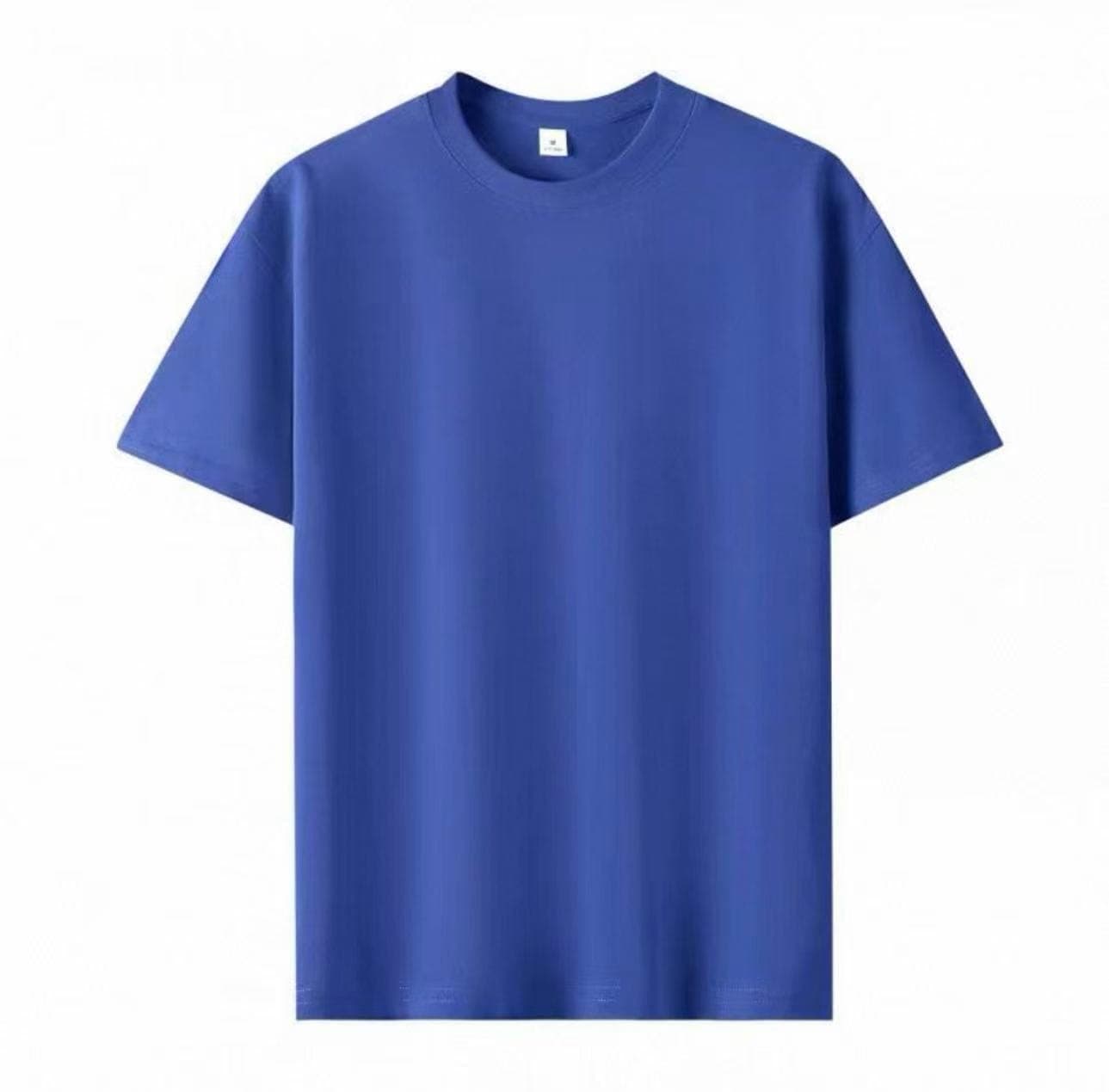
The range in our network runs from light shirts at 150 to 160 g/m² for events and ringer styles up to heavy streetwear shirts that some producers knit at more than 300 g/m². One supplier for blank shirts works with fixed weights: white T-shirts at 190 g/m² in a regular cut and at 240 g/m² as an oversized version, in European sizes.
For a heavy shirt with a normal cut, producers often recommend around 220 g/m². From 260 g/m² upwards a regular fit quickly feels stiff; such weights suit wide, boxy cuts better. Besides 100 % cotton there are blends: cotton with some polyester shrinks less, cotton with 5 % elastane suits close-fitting raglan shirts, and pure polyester is used for sports shirts that are sublimation printed.
Many men want shirts that reach well below the belt. Write the body length per size into the size chart, especially for XL and above, so that a 3XL also grows in length.
Decoration and tariff classification
Print methods for T-shirts are screen print (Siebdruck) for high volumes and solid colours, DTG for photographic artwork at lower volumes, and transfer for small multi-colour placements; embroidery (Stick) is used for logos. The method is specified per artwork with the manufacturer.
Striped shirts can be made in two ways: the stripes are knitted into the fabric, or they are screen printed afterwards. Knitted stripes also look clean on the inside and take more work. For a vintage look, some producers dye or wash finished shirts again, for example as acid wash. Dark shirts can be decorated with discharge printing, which removes the dye from the fabric and keeps the print soft.
A cotton T-shirt is classified under HS heading 6109. Knitted garments from China carry a 12 % EU duty rate; we check the classification again for your specific shirt. The minimum order is 300 pieces, split across colours and sizes for the article.
Typical T-shirt faults and how our team catches them
The usual deviations on T-shirts are side seams that drift towards the front after washing, a wavy neckline, a colour difference between body and neck rib, a fabric weight below the agreed value and prints that sit off centre. With large sizes, poor grading shows quickly when a 3XL only gets wider and hardly longer.
A precise specification with a size chart and tolerances prevents most of this. While the run is in progress, our team compares the first finished shirts with the approved sample. Before shipment it measures the finished goods again at the producer: length, chest width, fabric weight, print position, colour and the quantity per size. Anything that deviates is corrected at the producer while the goods are still there.
Lead times, delivery and landed cost
A simple shirt made from fabric the producer has in stock can be sewn in little more than a week. With specially dyed fabric, several print positions or knitted stripes, three to four weeks are realistic. Then you choose the transport: from the end of production, sea freight takes about 50 to 65 days to delivery, air freight about 15 days, and express for samples or small quantities usually about 5 days.
We combine the manufacturer price with sampling, inspection, freight, customs handling and delivery in the project calculation. The shirts arrive DDP at the agreed address, and the invoice comes from Germany.
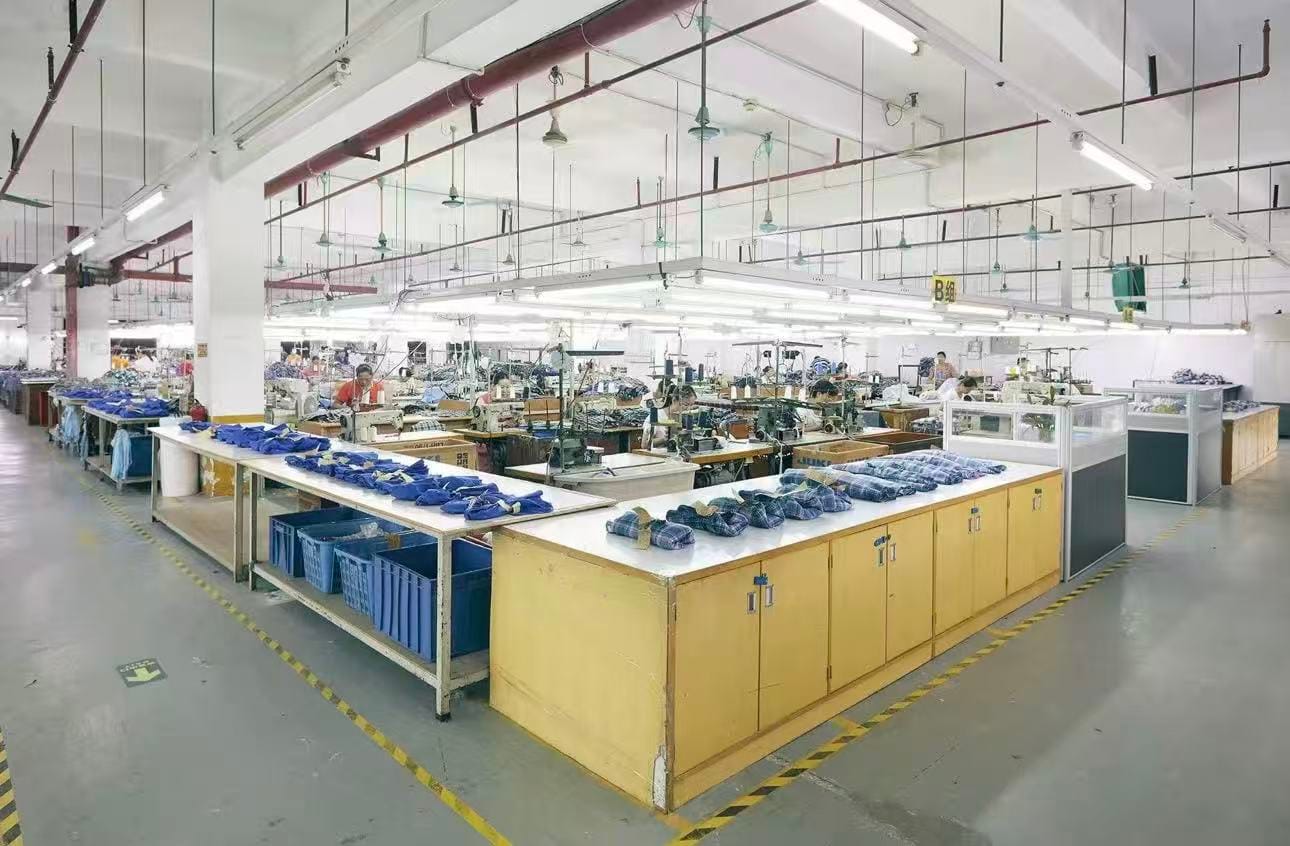
On site at our producers
What you can check on a T-shirt order
- Fabric weight, chest width and length of every size are set down in writing with tolerances and measured again on the finished goods.
- The sample shirt you approved is the reference for colour, print position and neck label across the whole run.
- Our own team in China checks twice on site: on the first finished shirts during production and on the complete goods before shipment.
- The quantity per size is counted before shipment and compared with your order, and the care label states the fibre composition.
- Your contracting party is a German company, and we issue the invoice from Hamburg with a German VAT ID.
- DDP delivery: the shirts reach your address in the EU with duty and import VAT paid; Switzerland is delivered DAP.
Clothing manufacturers
How we select and verify production partners.
Open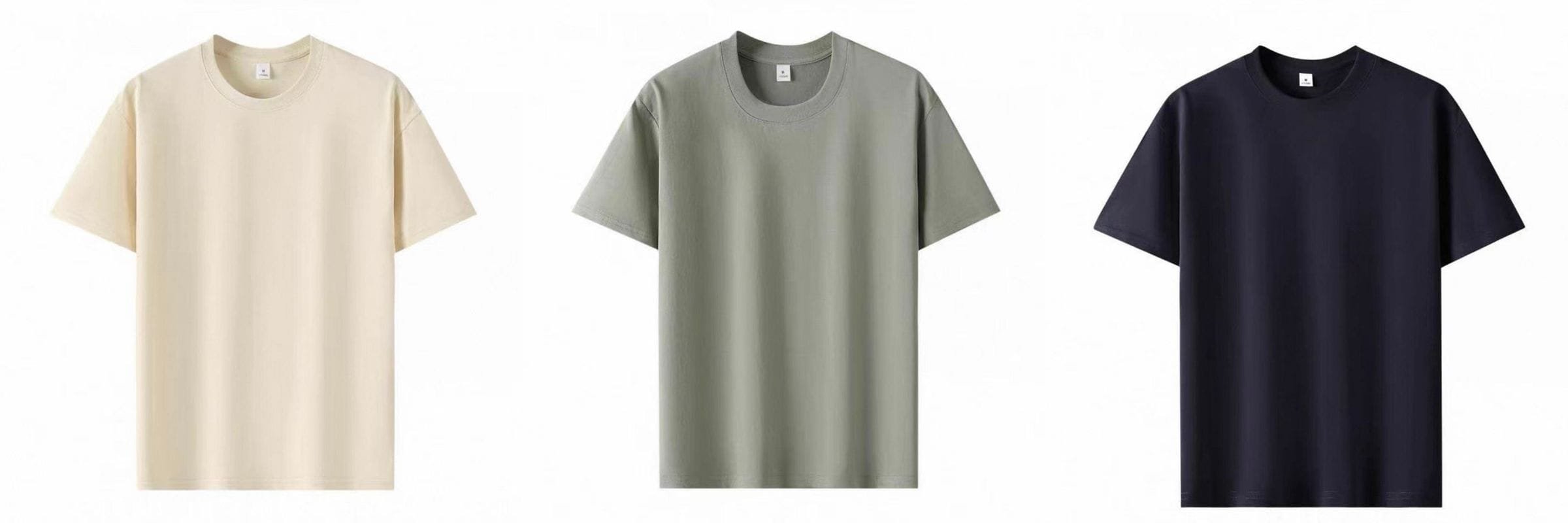
Guide: fabric, GSM and print
Background on fabric, weight, fit and print methods for T-shirts.
Open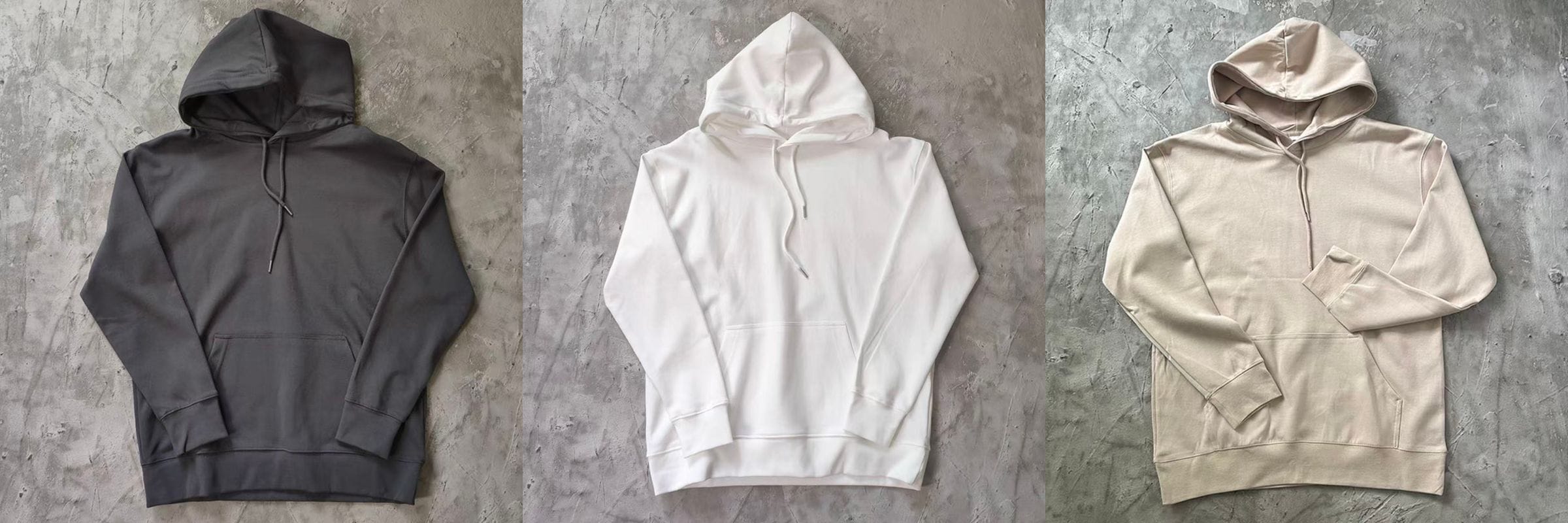
Hoodie manufacturers
Heavyweight fabrics, construction and finishing.
Open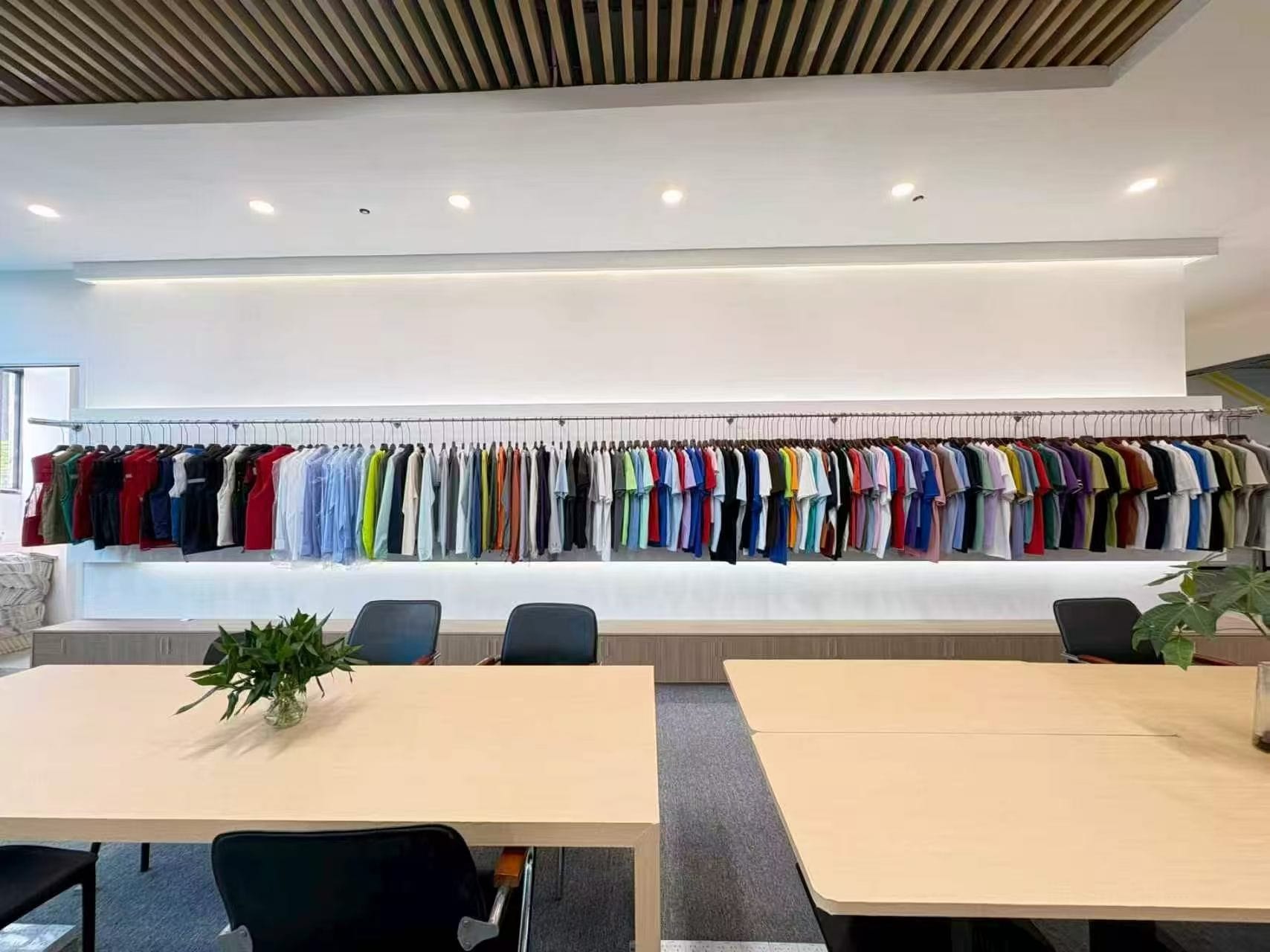
Sourcing in China
Manufacturer search, verification and negotiation.
Open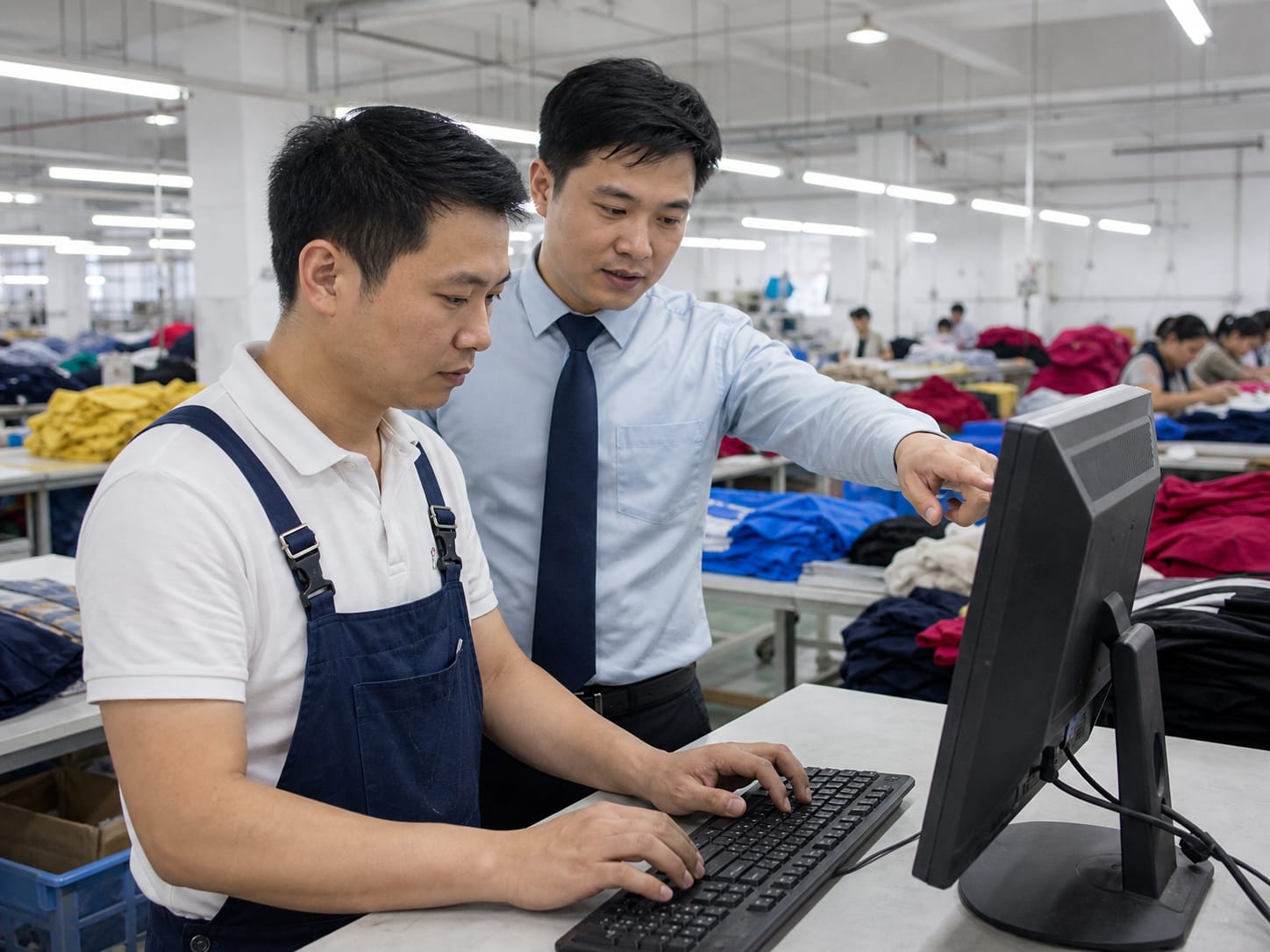
Quality control
Checks by our own team during production and before shipment.
Open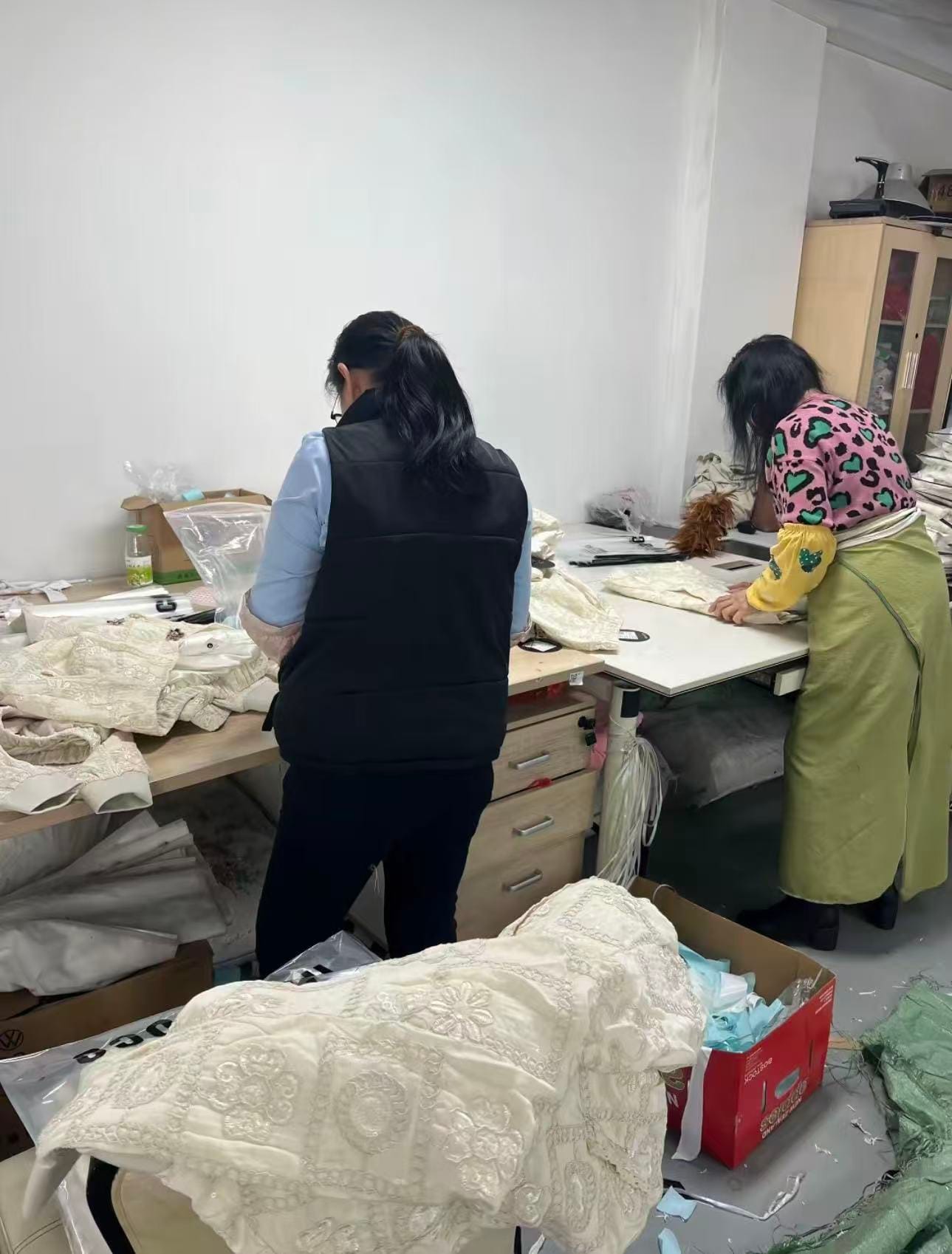
Private label clothing
From specification and labels to repeat orders.
OpenFrequently asked questions
Can T-shirts carry my own brand?
Yes. A woven or printed neck label, a care label with the fibre composition, a hangtag, print or embroidery and a polybag printed with your details are all part of the specification. You check all of it on the sample shirt before the series starts.
Do I need a tech pack?
No. A tech pack helps, but for a T-shirt a reference shirt you like, a size chart and your artwork are often enough. If something is missing, we clarify it in a short call and write the specification from it.
What is the minimum quantity?
The minimum order is 300 pieces. The feasible split between sizes and colours depends on the specific production setup.
Which fabric weight should I choose for a basic T-shirt?
150 g/m² is light and summer-weight, 180 g/m² is the common mid-weight anchor, and 200 g/m² feels more substantial. Heavy shirts with a normal cut usually sit around 220 g/m², oversized shirts at 240 g/m² and above. The final weight is fixed in the tech pack.
What is the difference between tubular and side-seamed T-shirts?
Tubular shirts have no side seams, cost less and can twist slightly after washing. Side-seamed shirts hold their shape better and allow a more fitted cut. The choice is part of the specification.
How long do T-shirts from China take from sample to delivery?
The sample takes about one to two weeks. The run itself takes little more than a week for a simple shirt from stock fabric and three to four weeks with specially dyed fabric or several decorations. Transport is added on top: about 50 to 65 days DDP by sea, about 15 days by air.
A quote for your T-shirt
Send us a reference shirt or photo, the weight you want, colours, artwork and the quantity per size. Within 48 hours you have our answer with a delivered price and lead time.
Request a quote