Pre-Shipment Inspection for Textiles from China
Which checks matter for textiles, how AQL sampling works, and why an inspection does not replace laboratory testing or clear specifications.
Request a quoteA pre-shipment inspection is the final systematic check of goods before a completed order leaves the factory. Deviations are usually easier to resolve there than after several weeks in transit. The inspection replaces neither a clear product specification nor required laboratory and conformity evidence.
What a pre-shipment inspection actually checks
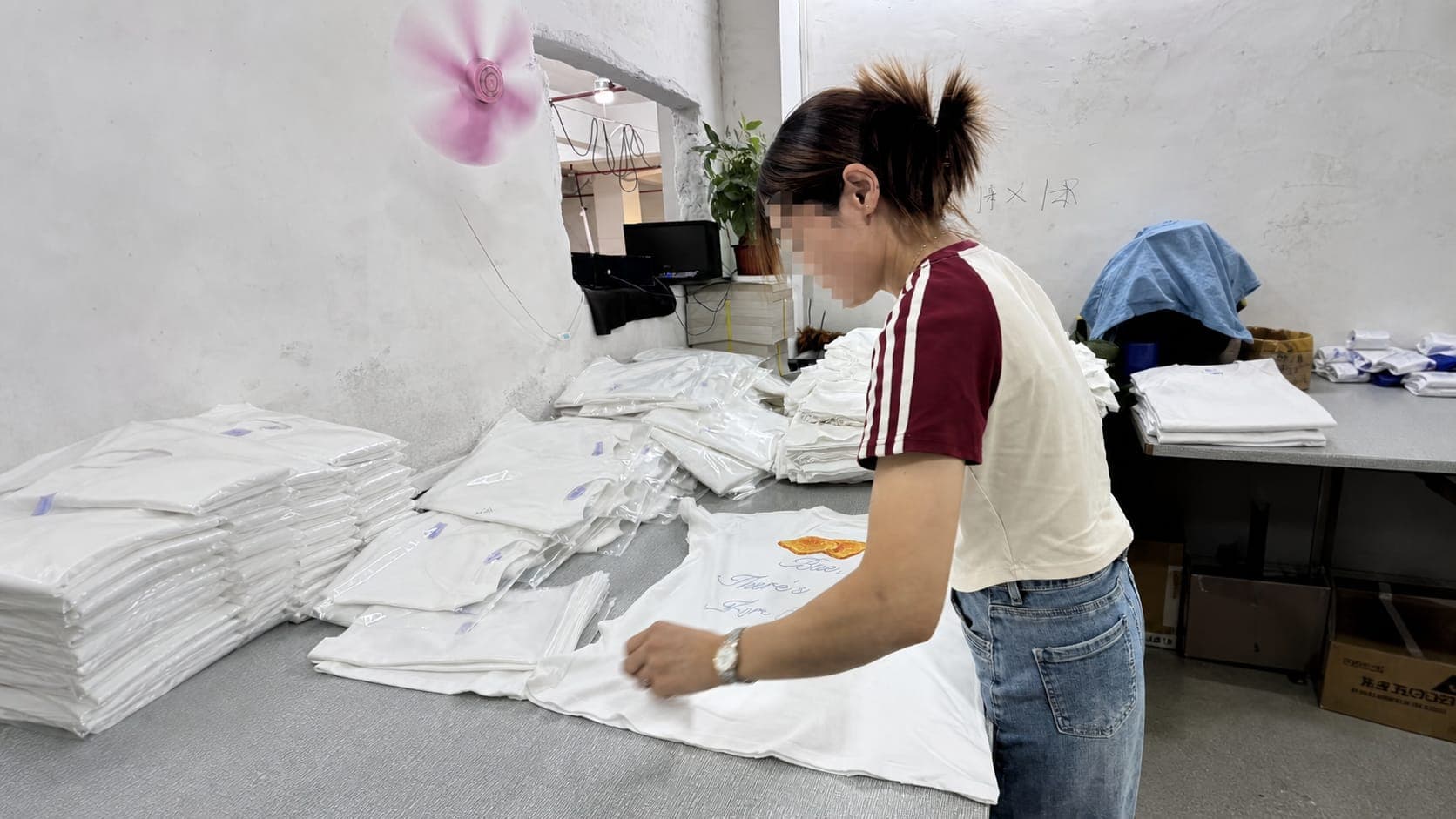
A pre-shipment inspection draws a sample from the finished, shipment-ready lot, not from goods still in production. Intertek describes this as an inspection of finished, packed goods before dispatch. Checks cover quantity, workmanship, function, colour, dimensions and packaging.
The exact checklist must match the product and the approved specification. For apparel, the following points are typically relevant:
- Products, sizes and quantities match the purchase order.
- Material, fabric weight, colour and hand feel match the approved sample.
- Measurements are within the agreed tolerances.
- Seams, hems, buttons, zips, prints and embroidery are finished cleanly.
- Size, care and fibre-content labels are correctly attached and legible.
- Individual packaging, carton assortment, barcodes and shipping marks meet the specification.
For apparel, QIMA lists product-specific checks: symmetry, shade comparison, colour fastness, fabric weight, fastener pull tests and seam slippage. Not every test suits every product. A T-shirt needs a different checklist than a rain jacket or shoe.
So the inspection answers one question: do the shipment-ready goods meet the agreed criteria? Without a clear specification, even an independent inspector can only document general defects.
How AQL sampling works
For larger lots, it is generally not practical to inspect every single unit. Instead, a sampling plan determines how many randomly selected units are checked and how many defects cause a lot to be accepted or rejected. A widely used international basis is ISO 2859-1:2026. The current edition describes AQL-based sampling plans for inspection by attributes.
AQL stands for “Acceptance Quality Limit”. It is not a quality guarantee and does not prove a specific defect rate in the entire delivery. It systematically defines sample size and acceptance limits. The result is a statistical decision based on the sample, not a 100% check.
Three points should therefore be agreed in writing before the inspection:
- which defects are classified as critical, major or minor,
- which sampling plan and inspection severity apply,
- which results lead to acceptance, rework or reinspection of the lot.
A critical defect presents a safety risk or involves a prohibited component. A major defect significantly affects use or appearance. Minor defects are deviations that do not impair normal use. The classification depends on the product, sales channel and agreed quality level, and it must not be improvised during the inspection.
Why the approved sample is the most important reference
An inspection can only assess goods against a defined target. Photos and descriptions are not enough. Reliable references include an approved physical sample, measurement chart with tolerances, material and colour specs, and documented branding and packaging requirements.
Sampling occurs before mass production. During our sampling process, the customer and our team assess the same product. Mass production starts only after written approval. During production, samples help detect deviations before the lot is complete.
This sequence matters, because a final inspection sits late in the process, where problems are harder to fix. Wrong fabric found in the finished goods can affect the whole lot; caught in a production sample, it can still be corrected. The pre-shipment inspection is still necessary: it checks the actual shipment lot, not an advance sample selected earlier.
A pre-shipment inspection is not a laboratory test
A pre-shipment inspection is primarily a visual, physical and document-based check at the production site. Simple equipment can verify dimensions, fabric weight, barcode readability and zip function. Chemical limits, material composition and complex safety requirements need laboratory testing.
A passed inspection does not transfer legal responsibility. Under Article 11 of the EU General Product Safety Regulation 2023/988, importers must ensure before placing goods on the market that they comply with general safety requirements and that the manufacturer has met obligations. Textiles are subject to fibre-labelling requirements. If the manufacturer is not established in the EU, the importer is responsible for providing and ensuring accurate labelling.
An inspection can verify that the agreed label is present and correctly produced. Whether stated fibre composition is chemically accurate requires suitable testing if doubted. Inspection checklist, laboratory plan and legal product review must be coordinated.
When the inspection should take place
Goods should be complete and packed for a representative sample to be drawn from the shipment lot. Enough time must remain before loading to assess deviations and carry out rework. An inspection after the container is sealed comes too late.
The practical process consists of five steps:
- The buyer and manufacturer confirm the specification, checklist and acceptance criteria.
- The manufacturer reports that the lot is complete and ready for shipment.
- The independent inspector draws a random sample on site.
- The report documents findings with quantities, measurements and photographs.
- Based on the report, the buyer decides whether to release, rework or reinspect the lot.
SGS describes pre-shipment inspection as independent verification of quality, quantity, labelling and packaging before dispatch. TÜV Rheinland calls it a third-party check to reduce risks and disputes. The inspector must be independent of the manufacturer and work to the approved criteria.
What happens when deviations are found
A failed result does not automatically stop shipment. First, establish which defects were found, how much of the lot is affected and whether sound rework is possible. Options include sorting, repair, part replacement, repacking or partial or complete reproduction.
After rework, the word of the manufacturer is not enough on its own. A new sample verifies that the documented causes were resolved. The schedule may shift, and a delayed shipment usually costs less than unsaleable goods or rework after arrival.
An inspection report must contain more than “passed” or “failed”. A meaningful report shows the sample, criteria used, defect classes, measurements, photos, packing status and order reference. This keeps the decision clear later.
What this means for importers
For importers, a pre-shipment inspection is not a substitute for supplier selection, sample approval or product safety. It is one checkpoint in a process: clear specification, approved pre-production sample, production monitoring and inspection of the finished lot.
At DS Trading, our own team in China checks the goods during production and again after completion, before shipment, on site at the producer, against the approved sample and your specification. See our Pre-Shipment Inspection page and Quality page for how this fits the full import process. To discuss a specific spec or checklist, use our contact page.
Frequently asked questions
How much does a pre-shipment inspection in China cost?
The cost depends on the inspection location, product, sample size, scope and the number of person-days required. At DS Trading, our own team in China checks the goods during production and again after completion, before shipment, on site at the producer.
Is every unit checked during a pre-shipment inspection?
Usually not. For larger lots, a random sample is selected according to a predefined sampling plan. A 100% inspection can be agreed, but it requires considerably more effort and must make technical and commercial sense for the product.
Does a passed inspection replace product testing and labelling checks?
No. The inspection can check visible workmanship, dimensions, function, packaging and the presence of labels. Laboratory tests, legal product requirements and the importer’s responsibility remain separate.
Sources
- ISO 2859-1:2026 – Sampling procedures for inspection by attributesInternational Organization for Standardization · January 2026 · accessed 14 August 2026
- Inspection Services for Products & RetailIntertek · no date provided · accessed 14 August 2026
- Mastering Apparel Quality Control ProceduresQIMA · 17 February 2025 · accessed 14 August 2026
- Pre-Shipment InspectionSGS · no date provided · accessed 14 August 2026
- Pre-Shipment InspectionsTÜV Rheinland · no date provided · accessed 14 August 2026
- Regulation (EU) 2023/988 on general product safetyEuropean Union · 10 May 2023 · accessed 14 August 2026
- Regulation (EU) No 1007/2011 on textile fibre names and related labellingEuropean Union · consolidated 15 February 2018 · accessed 14 August 2026
Ready for your quote?
Send us your product and target quantity. We reply within 48 hours with a quote including landed cost and lead time.
Request a quote