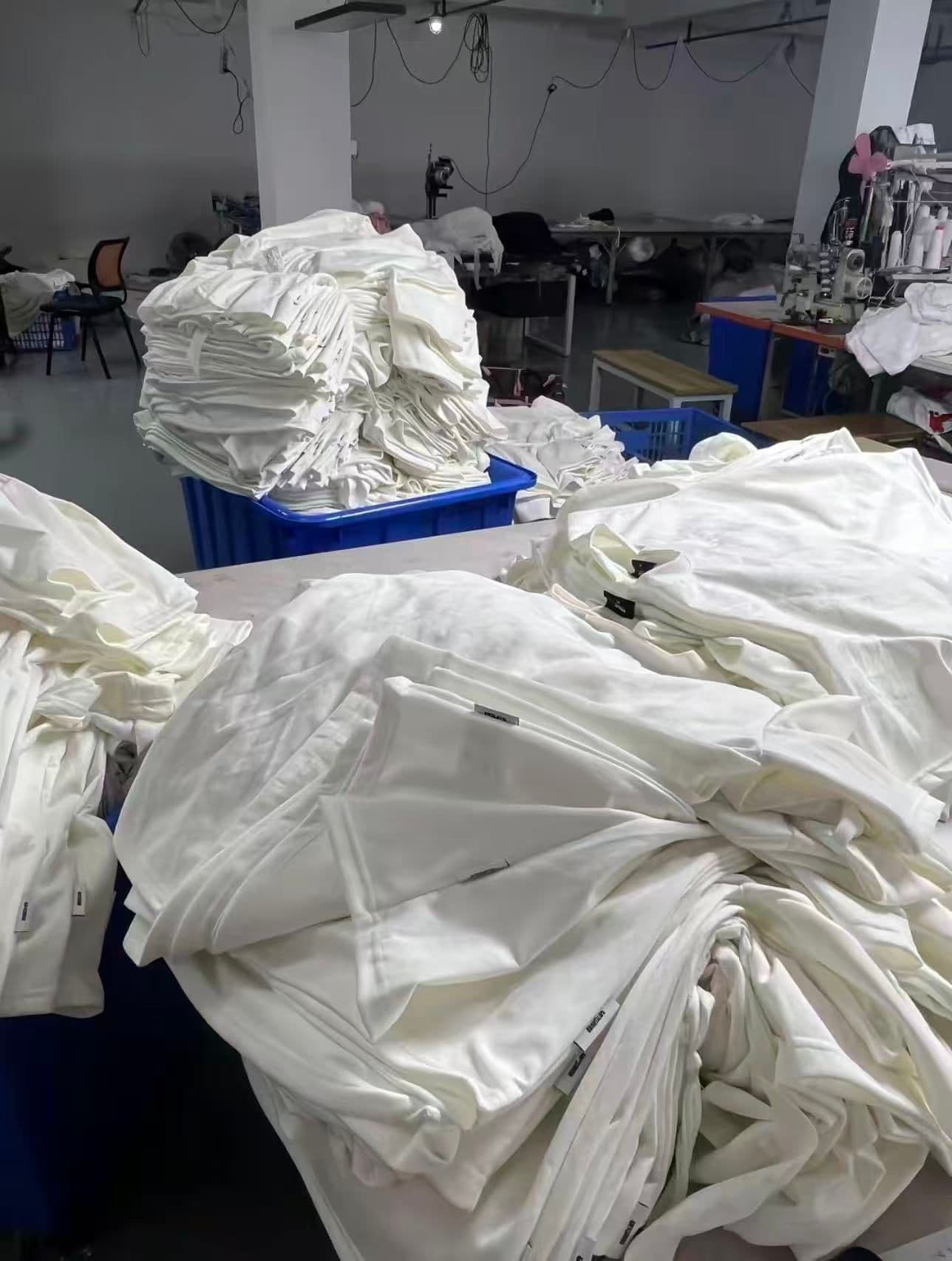
Failed Pre-Shipment Inspection: What Happens Next
What happens when the check before shipment finds defects: grading the defects, rework and sorting, re-inspection, costs, the delivery date, and how to catch typical textile defects earlier.
Request a quoteWhen the check before shipment finds defects, it is annoying. But this is exactly the moment the check exists for: the goods are still at the producer, and defects are easier to fix there than after weeks at sea. This article explains what happens after a failed inspection, who pays for what and how many defects can be caught during production.
What happens right after a failed inspection?
The goods are not loaded. Our team records the findings with photos, measurements and quantities and compares every point with the approved sample and the specification. What counts is what you approved in writing. Something that was only agreed in a chat is hard to enforce with the producer.
That is why there is more than one approved sample. One stays with you, another with us for checking. During the inspection, bulk goods and sample lie side by side on the table, because shade, handle and stitch density are hard to judge from photos. If bulk differs, the side-by-side comparison shows it at once, and the producer cannot argue it away.
Next we work out with the producer how serious the defect is, how many pieces are affected and where it comes from. Only once the cause is clear can you say whether sorting is enough or more is needed.
How are defects graded?
By severity and by frequency. A loose button on children's clothing is a safety problem and therefore a critical defect. A loose thread on an inside seam is a small cosmetic flaw. In between are defects that affect use or sale, such as wrong measurements, a visible colour difference or a crooked print. Our article on AQL inspection explains how defect classes and sample sizes fit together.
A minor defect can also make a batch fail if it occurs very often. Twenty shirts with loose threads are reworked quickly. A care label without fibre content on every single piece is a problem for sale, because the EU Textile Labelling Regulation requires the fibre composition to be stated.
Which defects are typical for textiles?
With clothing and caps, the same defects come up again and again:
- Measurements outside tolerance, often only in certain sizes
- Colour differences between two dye lots, or between fabrics in the same colour, such as fleece and jersey
- Fabric lighter than the agreed weight
- Open or crooked seams, loose threads and stains from production
- Embroidery with visible joins or messy outlines, prints shifted or too pale
- Trims such as buttons, buckles or metal parts in a different colour or quality than approved
- Labels missing, in the wrong place or with the wrong content
- Packing not as agreed, for example several pieces in one bag instead of individually packed
- Packing list and shipping marks do not match, quantities per carton mixed up
Caps have defects of their own: the brim is not cut to the agreed length, the crown shape is off, or the buckle is a different colour from the sample. With 3D embroidery, the padding sometimes sits unevenly, so the logo looks flatter on one side.
Many of these defects start before sewing. A buckle in the wrong colour gets bought because the right colour was not available in time and the factory thought a similar one would do. A messy print often goes back to artwork that arrived only as a picture, without the vector file. These causes matter, because they decide which fix is the right one.
Rework, sorting or remaking: which route fits?
That depends on the defect and how far it reaches. In practice there are four routes:
- Sorting: every piece is looked over and the faulty ones are taken out. This works when only part of the batch is affected and the defect is easy to spot.
- Rework: trimming threads, re-sewing seams, replacing labels, re-pressing and repacking. This is quick as long as fabric and cut are fine.
- Replacement: faulty pieces are sewn again, ideally from leftover fabric of the same dye lot.
- Remaking: for the wrong fabric, a wrong colour across the whole lot, or measurements that cannot be corrected.
The fastest fix is not automatically the right one. A misplaced print cannot be removed. Embroidery can be unpicked, but it leaves needle holes in the fabric. Before the producer starts, we discuss with you which fix suits your sales channel. Goods for your own online shop can live with different compromises than goods for a retailer with strict incoming inspection.
Is there another check after rework?
Yes. A promise from the producer or a single photo is not enough. Our team checks the reworked goods again at the producer, once more against the approved sample. We look at the points that failed and at new defects that rework can cause, such as shiny marks from pressing or cartons mixed up during repacking. Only when this check passes do the goods go to shipping.
Who pays for the rework?
If the goods differ from the approved sample or the written specification, the defect lies with the producer. It reworks the goods and bears 100 % of the cost. That is why written sample approval matters so much. It is the yardstick that settles every argument about a defect.
It is different when something was changed after approval, such as a colour or an embroidery file. If the goods then differ from the old sample, that is not a defect. We tell you about extra costs and delays from such changes before they arise.
With us, you pay 60% when the contract is signed and 40% after the shipping document, meaning the bill of lading or air waybill. A batch that failed inspection is not loaded, so the remaining payment is not due yet either.
What does it mean for the delivery date?
It moves, and how far depends on the defect. Replacing labels or trimming threads often takes only a few days. If fabric has to be re-dyed or part of the goods sewn again, it can quickly be several weeks. The re-inspection comes on top in each case.
Sometimes you can win back time through the shipping method. Sea freight DDP takes 50 to 65 days, air freight about 15 days. Whether the extra cost of air freight is worth it is your decision. A split shipment can also make sense: the goods without defects go first, the rest follows after rework.
How do we keep you informed?
As soon as the inspection shows defects, we get in touch without you having to ask. You receive the findings with photos, our view of the cause, a proposed fix and a new, realistic date. Your contact stays the same until the goods reach you. If you supply customers yourself, that gives you enough lead time to adjust their dates.
How can defects be prevented during production?
Most of the defects listed above can be caught earlier. That is why our team already checks the goods during production at the producer. At that point only part of the quantity is finished, and a correction affects a few pieces instead of the whole batch. During this check we look mainly at:
- Fabric and colour of the bulk lot compared with the approved sample, before the full quantity is cut
- Buttons, buckles and other trims, before they are sewn in
- The first finished pieces off the line, with measurements in all sizes, seams, embroidery and print
- Label content, with fibre composition, care symbols and sizes
- Packing instructions and shipping marks, before packing starts
Part of prevention happens before the order. A specification with a size chart and tolerances, print files as vectors sent by email or cloud link, and a clear list of trims that must not be swapped prevent a lot of arguments. If you have no tech pack, we go through the points with you on a call. Our article on the tech pack for clothing lists what belongs in one.
One simple rule belongs here as well: if a trim or fabric is not available in time, the producer asks before using anything else. This rule should be part of the written agreement with the producer. The question then reaches you while there is still time to decide, and you choose between a substitute and a later date.
After every batch, the findings go into the documents for the reorder. Next time, our team checks exactly the points that came up last time.
Our page on quality control shows how our two checks are set up. The inspection step in our process is under pre-shipment inspection, and the check points in detail are in the guide to pre-shipment inspection for textiles. You can download our PSI checklist as a template for your own requirements.
Frequently asked questions
Does a failed batch have to be destroyed?
No, in most cases it does not. Sorting or rework is usually enough. Only if the fabric, colour or measurements of the whole lot are wrong is it remade.
Who pays for the rework?
If the goods differ from the sample or specification approved in writing, the producer bears the full cost of the rework. If the differences go back to changes made after approval, they are not a defect. In that case we tell you the extra costs in advance.
Is a photo enough as proof of rework?
No. Our team checks the reworked goods again on site at the producer against the approved sample. Only then are they loaded.
How long is delivery delayed?
Small rework such as replacing labels often takes only a few days. If fabric has to be re-dyed or pieces sewn again, it takes several weeks. We give you a new, realistic date straight away.
Can I waive the checks?
Yes. The order then becomes cheaper. Defects will only show up once the goods are already with you, though, and fixing them at that stage takes far more effort.
Sources
- ISO 2859-1:2026 – Sampling procedures for inspection by attributesInternational Organization for Standardization · Januar 2026 · accessed 24.08.2026
- Verordnung (EU) 2023/988 über die allgemeine ProduktsicherheitEuropäische Union · 10.05.2023 · accessed 24.08.2026
- Verordnung (EU) Nr. 1007/2011 über Textilfaserbezeichnungen und KennzeichnungEuropäische Union · konsolidierte Fassung · accessed 24.08.2026
Ready for your quote?
Send us your product and target quantity. We reply within 48 hours with a quote including landed cost and lead time.
Request a quote