Supplier Audit in China: How to Check a Producer Before the First Order
Business licence, factory visit, machines, workload, subcontractors and the gap between sample and bulk: what to check before the first order and which warning signs matter.
Request a quoteA supplier audit answers one simple question before the first order: can this producer make your product in your quantity by your date? A tidy website, quick replies and a nice sample do not answer it yet. The audit has several parts, and each one covers a different risk.
Our team knows more than 100 producers personally. Before a producer joins our network, we have been to its factory and seen its paperwork. The points below show what we look for and what you can check yourself.
How do I check a Chinese producer's business licence?
Ask for a scan of the business licence (营业执照) and compare it with every other detail you have. Company name, registered address, legal representative and business scope have to match the contract partner, the invoice and the account you pay into. The licence carries an 18-digit Unified Social Credit Code, which lets you look the company up in China's official company register.
Read the business scope carefully. If it lists trading only and no manufacturing, the supplier is probably not a manufacturer. That need not rule it out, but you should know before you negotiate. The founding date is on the licence too. A business that is only a few months old has no track record with bulk orders or complaints.
- The name on the licence differs from the name in the contract.
- The account for the deposit belongs to another company or a private person.
- The invoice comes from a third company that does not appear in the contract.
- The licence never arrives, even after several requests.
- Asked where the factory is, the supplier names only a province, with no city and no address.
A valid licence only shows that the company exists. It tells you nothing about machines, quality or reliability on dates. It still matters: under the EU General Product Safety Regulation, the importer has to make sure before placing goods on the market that the manufacturer has met its obligations, including the manufacturer details on the product or packaging. If you do not know who actually makes the goods, that is hard to do.
Are photos and videos from the factory enough?
No. Photos and videos of production lines show that a factory exists somewhere. They do not show that this factory will make your order. A video with no company sign, no recognisable address and no goods from your segment is of little use in an audit.
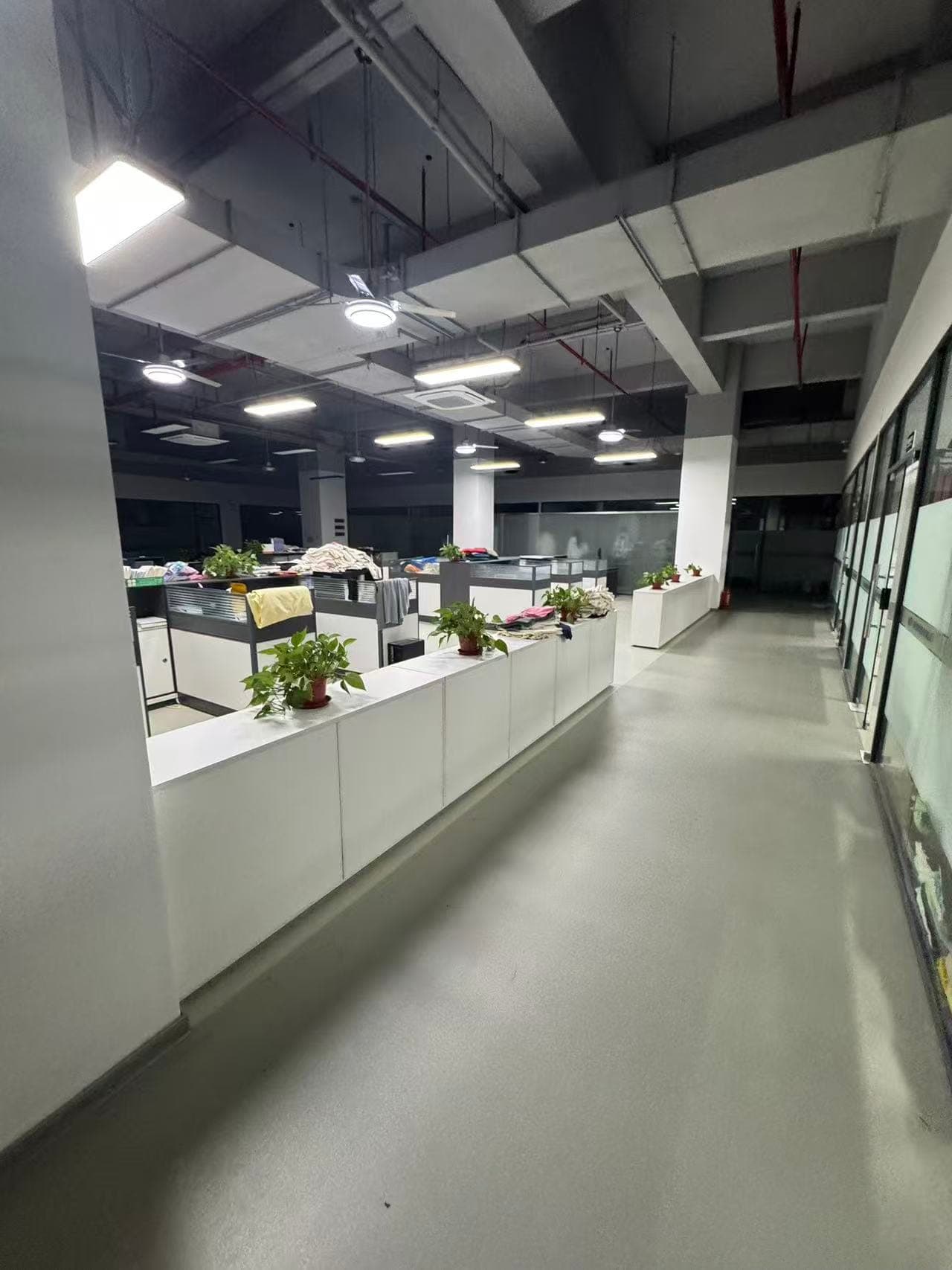
A visit on site shows what no photo does: how busy the lines are, what is running right now, whether anyone checks goods at the end of the line and how fabric is stored. Our team works in China. Anything we need to know about a producer, we can check on site straight away.
What does our team look at during a factory visit?
- Company sign and address compared with the business licence
- Type, number and condition of the machines your product needs, such as circular knitting, flatlock or embroidery machines
- Which orders are on the lines right now and whether any are from your segment
- The sample room and the people who work in it
- The store for fabric and trims, including whether dye lots are labelled
- The inspection table at the end of the line: who checks, against which reference and with which tools
- The packing area with polybags, cartons and shipping marks
- Which steps happen in-house and which go out
Do machines and capacity fit your product?
You can only answer that for the specific item. A producer that makes very good jackets is often not the best choice for trousers. Not every cap factory can shorten the brim to a set length, and with 3D embroidery you can see the difference between a basic and a better embroidery machine. Ask for goods the producer has already made in exactly this construction.
For capacity, the figure in the company profile does not count for much. What matters is how many lines your item takes up, which orders are ahead of it and when the fabric will be available. Around Golden Week in October and Chinese New Year, delays are more common, because many factories are fully booked and some suppliers do not work on the holidays.
How big is the subcontracting risk?
In textile production, some steps almost always go out of house. Embroidery, printing, dyeing and washing are often done by specialist workshops, and that is fine. The problem is subcontracting you do not know about.
It becomes serious when the whole order goes to another factory without your agreement. That happens when the price is calculated too tight or the factory cannot handle one of the steps itself. Then someone other than the factory whose sample you approved makes your goods. Agree beforehand which steps go to whom and who is answerable for quality and dates. The contract should say that passing the order on is allowed only with your written consent.
Why is a good sample no proof of bulk quality?
Samples are made in the sample room, often by the most experienced machinists and without time pressure. Bulk runs on the lines, with fabric from a different dye lot and a fixed delivery date. So bulk can turn out weaker than the sample even when nobody does anything wrong on purpose.
Sometimes the sample even comes from a different factory than the later bulk order. Ask where the sample was sewn and where bulk will run. Before bulk starts, there should be a pre-production sample in the real bulk fabric with the real trims. Our team checks the goods against that sample during production and again before shipment. Our page on sampling explains the sample stages.
How can you tell whether communication will work?
The way a producer communicates before the order is usually the way it communicates during production. Good producers ask about fabric weight, size chart and finishing before they quote. A short "ok" or "noted", on the other hand, does not mean anything will be done. Important points belong in the written specification; a chat history is not enough as a record.
Send print files by email or cloud link and ask for confirmation that they opened. Vector files often arrive damaged over messenger apps, and then the factory works from a picture. It is a good sign when a producer names limits on its own, for example that the same green comes out differently on fleece and on jersey. A producer who says that openly usually also reports problems in time later on.
What do references and certificates really tell you?
Many producers will not name their customers, which is understandable. More telling is whether the factory already makes goods for the European market. Does it know that the fibre content has to be on the label? Does it know which warnings go on polybags? Ask to see goods that are currently running for Europe.
Audit and test reports deserve a close look. The company name and address on the report have to match the factory that makes your goods. A report on a different site tells you nothing about your order. A test report the factory wrote itself is not a lab report. And a quick "yes" when you ask about a certificate does not replace the document.
Which warning signs should you take seriously?
- The company name only comes after days, and the business licence never does.
- Every question about organic goods, social audits or certificates gets a yes without any document.
- Once the full specification is in, the price rises sharply although nothing about the product has changed.
- The factory is switched during sampling, and you only find out when you ask.
- A part is swapped for a "similar" one without asking, such as a gold buckle instead of the approved silver one.
- Sample photos are postponed again and again without a new date.
- The producer offers to copy designs of well-known brands or to declare a lower value to customs.
- Full payment is demanded before the sample has been approved.
One signal on its own is not a verdict. When several come together, another producer is almost always the better choice. An offer to copy designs or to understate the customs value is reason enough on its own to stop, because you as the importer are liable.
How does DS Trading check producers?
Before a producer gets an order through us, we check the business licence, visit the factory and look at whether its machines, experience and workload fit your item. Then comes a charged sample and your written approval. During production and after completion, our own team checks the goods at the producer before they are loaded. One European contact takes you through the whole project.
Our page on quality control describes the checks that follow the audit. The step pre-shipment inspection shows the last check before shipment in our process, and the pre-shipment inspection guide gives the background. For an overview of clothing producers, see clothing manufacturers in China; the whole process is under sourcing.
Frequently asked questions
Is a supplier audit the same as a pre-shipment inspection?
No. The audit checks the producer before the first order: the company, the factory, the machines and the processes. The pre-shipment inspection later checks the finished goods against the approved sample before shipment.
Is the business licence enough as a check?
No. It confirms that the company is registered and what its business scope is. Whether the factory can make your product in the quality and quantity you need only becomes clear from a visit on site together with a sample.
Do I have to travel to China myself for an audit?
No. Our team works in China, visits the producers on site and reports back to you on what it saw. Questions about a producer can be cleared up there directly.
Is it a bad sign if a producer outsources some steps?
Not necessarily. Embroidery, printing or dyeing often go to specialist workshops. What matters is that you know beforehand and that it is clear who is responsible for quality and dates.
Sources
- Verordnung (EU) 2023/988 über die allgemeine ProduktsicherheitEuropäische Union · 10.05.2023 · accessed 24.08.2026
Ready for your quote?
Send us your product and target quantity. We reply within 48 hours with a quote including landed cost and lead time.
Request a quote